Connections Speech Therapy
  • Home
    • Reading Enrichment
  • Services
    • Sensory Processing
  • About Us
    • Our Space
  • FAQ
    • Resources
    • SPEECH & LANGUAGE MILESTONES
    • Blog
  • Contact
    • Get Started!

Did You Know an SLP Can Help with That?

5/8/2018

2 Comments

 
Picture
May is Better Hearing & Speech Month and a great time to highlight some of the lesser known skills and areas of development addressed by Speech Language Pathologists.

Many people have the perception that speech therapy is a therapist and student sitting at a table as the therapist shows her student pictures and demonstrates proper production of the "r" sound.  Some people are surprised to hear that we work on much more than a child's mispronunciations.  Did you know that Speech Language Pathologists (SLP's) are educated and trained to evaluate, diagnose, and treat challenges in the following areas?
  • Literacy:  Speech Language Pathologists are trained to analyze children’s strengths and weaknesses at word, sentence, and discourse levels.  How a child listens to and understands language and how he speaks provides the foundation for the development of reading and writing.
    • ​​A SLP understands  phonology and language processing and can collaborate with teachers to address difficulties involving phonological awareness, memory, and word retrieval. 
  • Cognitive-communication: Cognitive-communication abilities or our "executive function," are the thought processes that allow us to function successfully and interact meaningfully with each other. It's how well our minds are working.  Examples of the processes that make up cognitive-communication include:  attention, memory, problem solving, and organization.        
    • A child can struggle in school if he has trouble carrying  out organized steps to successfully complete a task.  A SLP often works with a student's cognitive communication to improve writing skills, for example, by helping them learn to organize their thoughts, initiate writing assignments, expand their ideas, evaluate and edit their writing, and meet the requirements of the assignment. ​
  • Social Skills and Understanding Social Cues:  Social communication, or pragmatics, refers to how we communicate within social contexts.  It includes the ability to use language for different purposes (to greet others, to make a demand, to request), the ability to adapt language to meet the needs of the listener or situation, and following the often “unspoken” rules of conversation and storytelling, including taking turns in conversations, looking at the speaker, standing at an appropriate distance from the speaker, and using facial expressions and gestures. 
    • ​A SLP can help a child who may be having difficulty making friends or interacting with others by directly teaching these social skills. 
  • Feeding and swallowing:  The anatomy used to produce sound and speech are similarly used to suck, chew, and swallow food and liquid. SLP's have a specific understanding of the anatomy and physiology of oral, pharyngeal and laryngeal structures as well as the respiratory system to be able to evaluate and treat difficulty with feeding and swallowing.
    • ​A SLP can help if your child may be demonstrating some of the following signs of feeding and swallowing difficulties:
    • Arches her back or stiffens when feeding
    • Cries or fusses when feeding
    • Has problems breast feeding
    • Falls asleep during feeding
    • Has trouble breathing while eating and drinking
    • Refuses to eat or drink
    • Eats only certain textures, such as soft food or crunchy food
    • Takes a long time to eat
    • Has problems chewing
    • Coughs or gags during meals
    • Drools a lot or has liquid come out her mouth or nose
    • Spits up or throws up a lot
    • Is not gaining weight or growing​​
  • Voice:  Vocal quality, pitch, loudness and respiration all play a role in producing a strong, healthy voice. The inability to use one's voice effectively can negatively impact a child's relationships and interactions.
    • The goal of voice therapy is to help build and maintain a strong, clear, healthy voice that meets social and vocal demands.
These are just a few of the many skills and areas of development that speech therapy may address.  One of the reasons I was drawn to this career was that I knew I would never be bored!  It's a wonderful profession that allows me to utilize my creativity and problem solving and enables me to constantly learn new skills!  Contact Connections Speech Therapy today if you have questions about these areas or any aspect of your child's speech and language development!

2 Comments

TRADE SCREEN TIME FOR GREEN TIME!

4/26/2018

2 Comments

 
Picture
Picture
Picture
Picture
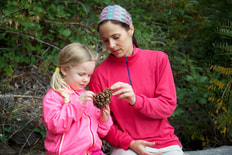
What better way to kick off the much-delayed start to the Spring season and get out to enjoy some sunshine than by resolving to "trade screen time for green time!"  I came across this new favorite phrase the other day and I love its call to action!

During my summers off from college, I worked at a summer camp as the "Nature Activities Specialist."  I can honestly say that the highlight of my days spent there was "creek stomping" through the water with my eager troops, their eyes filled with wonder and curiosity as we discovered all the unique treasures offered by the environment.  From the sounds of the bugs and the birds, the frogs and the ducks, to the feel of the mud squishing under our feet and the water splashing up on our legs, it was the perfect blend of sensory integration and experiential learning!  

​While "creek stomping" may be a bit ambitious for some folks, there are lots of ways to easily trade your child's screen time for green time:
  • ​​Go on a walk but make it a scavenger hunt . . . . ask your child to locate the items you name, whether it be something simple and concrete for young children (Do you see a ... "tree"/"rock"/"truck?") or something more challenging or descriptive for older children (Where would you look for a ... "caterpillar"/"weed"/"nest?" or What do you see that is ... "brown"/"bumpy"/"dirty?").  
  • Plant some seeds or flower beds together ... include your child in the process and talk about the actions involved (dig, water, grow).
  • Look at the clouds together and talk about the shapes that you see!
  • Build a simple obstacle course ... you can use items you might have laying around the garage (a hula hoop, a ball, a tricycle) or simply use the great outdoors .... run around a tree, hop on and off a curb or over a line, crawl through the grass, etc.
  • Draw with some sidewalk chalk - draw pictures of common objects, write letters and say the sounds or write a letter inside a large circle and find items that start with that letter or sound!

All of these activities are designed to promote your child's vocabulary and knowledge of concepts, such as description, positions, and categories.  The best part, though, is that the activities help you to engage with your child while moving, learning, and having fun!  So "spring" into action and start trading that screen time for green time!  

2 Comments

THE UNDERDOGS

3/18/2018

0 Comments

 
Picture
I would describe myself as a casual sports fan . . . far from obsessed and frankly, not all that knowledgeable, but someone who enjoys watching my favorite teams and cheering them on.  Who doesn't love the thrill of victory, especially when it is won against all the odds? 

With our daughter home from college this week for Spring Break, we had the pleasure of cheering on the Syracuse men's basketball team with her as March Madness began and the Syracuse Orange unexpectedly marched their way toward the Sweet 16 in the annual NCAA basketball tournament.  I love a good Cinderella story and the Orange provided one as the last team selected to even play in the tournament.  Yet, they successfully overcame the odds against them to beat teams favored to win, and they proved their naysayers wrong.  They proved that they belong.

I think it's natural to want to cheer on the underdog, even if it isn't your team.  As I thought about the victory today for Syracuse, I thought about the kids that I cheer on everyday, the underdogs who may be fighting to overcome incredible odds against them.  But just like the basketball players in the NCAA tournament, they too prove that you can never count anyone out, that they belong, and that victory is sweet.  I love having the honor of "coaching" them and sharing in each step they take toward victory.  Never underestimate the underdogs, they are our heroes!


0 Comments
Forward>>

    Author

    My name is Katherine Hindman.  I have been a speech therapist for over 20 years and truly love what I do!

    Archives

    November 2022
    October 2022
    April 2020
    February 2020
    January 2020
    November 2019
    April 2019
    February 2019
    January 2019
    September 2018
    May 2018
    April 2018
    March 2018

    Categories

    All

    RSS Feed

Connections speech therapy
5 E Darrah Ln.
​lawrenceville nj 08648

Connect!

    Contact us Today!

Submit
  • Home
    • Reading Enrichment
  • Services
    • Sensory Processing
  • About Us
    • Our Space
  • FAQ
    • Resources
    • SPEECH & LANGUAGE MILESTONES
    • Blog
  • Contact
    • Get Started!